Technique · 5 August 2023
The Art of Water and Light: Dubai's Iconic Fountain
By Ramees Muhammed
Engineering, Artistry, and the Convergence of Public Space
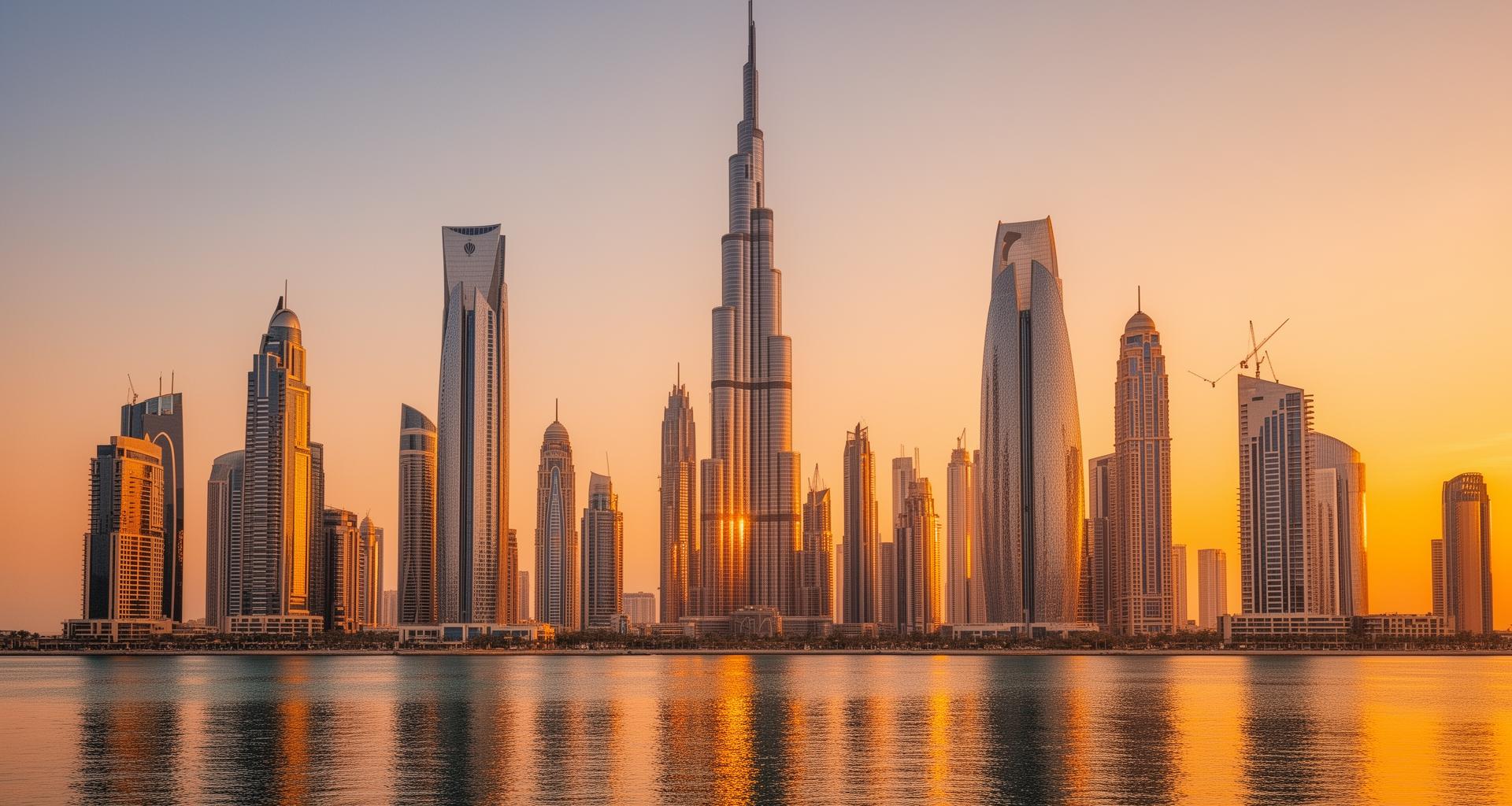
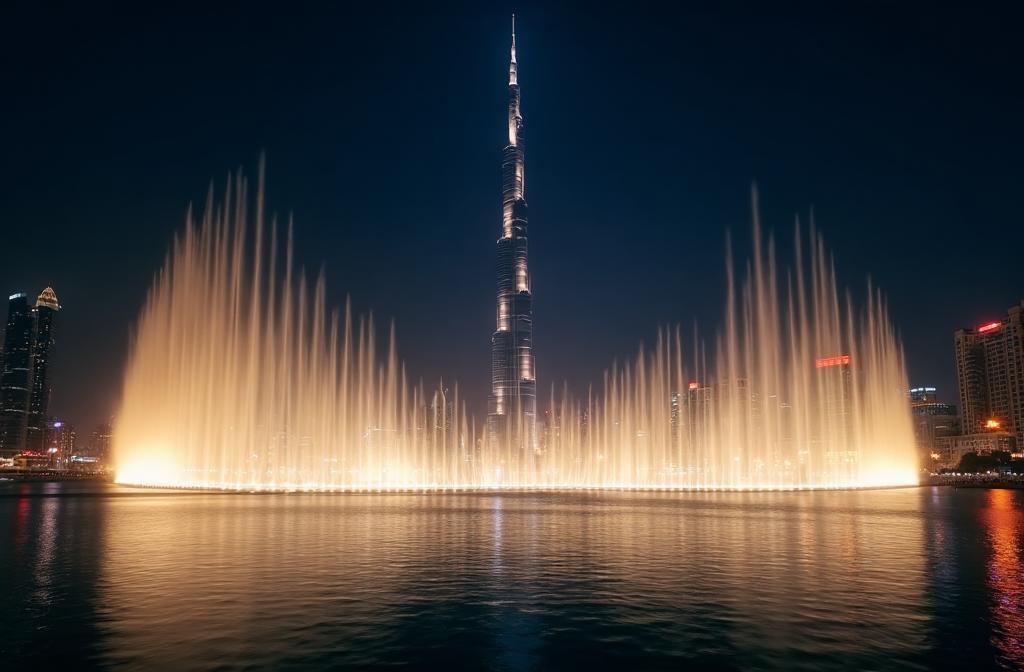
There are rare moments in the built environment when engineering, artistry, and public space converge to produce something that transcends its individual components. The Dubai Fountain, positioned at the base of the Burj Khalifa within the Downtown Dubai masterplan, is one such achievement. It is not merely a fountain. It is a nightly performance of light, water, and sound that has redefined what civic-scale lighting installation can accomplish.
For lighting designers, the Dubai Fountain is significant not as a spectacle to be admired from a distance, but as a rigorous case study in the integration of dynamic illumination with kinetic architecture. The lessons it offers extend well beyond the scale of the installation itself.
Choreography as Lighting Strategy
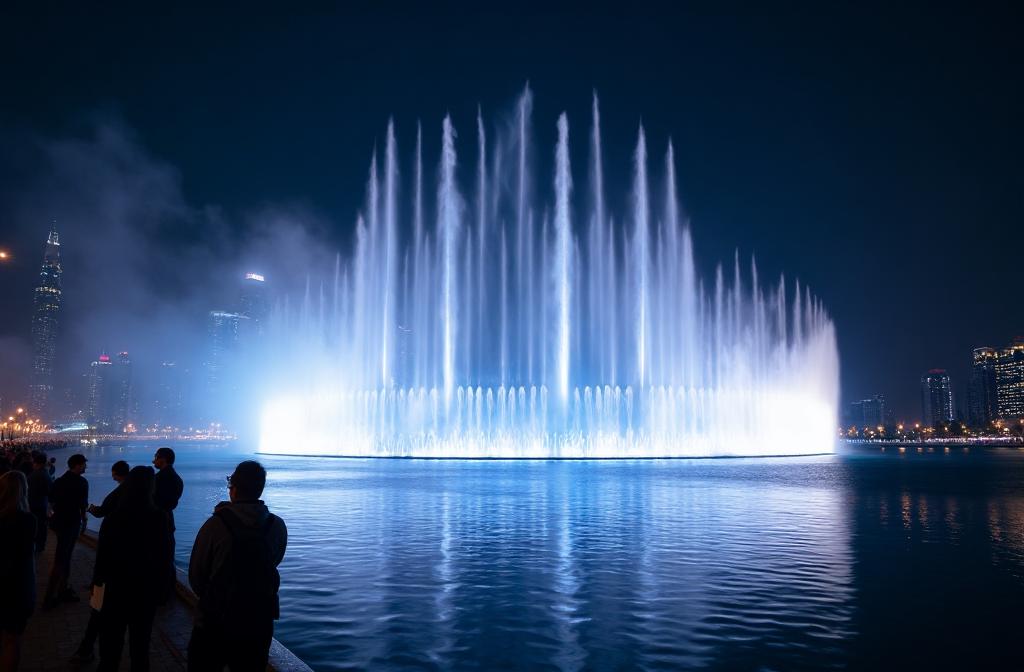
The fundamental design principle underlying the Dubai Fountain is choreographic. Light does not simply illuminate the water. It moves with it, responding to the velocity, trajectory, and density of each jet in real time. This synchronisation between illumination and kinetic form transforms water from a passive medium into an active canvas for light.
Designed by WET Design, the system employs a proprietary control platform that coordinates every luminaire with the musical score and the hydraulic programme simultaneously. The precision required is extraordinary: colour changes, intensity shifts, and beam movements must align with water trajectories that vary by fractions of a second. The result is a performance that feels organic and spontaneous, despite being the product of meticulous technical calibration.
The Optical Infrastructure
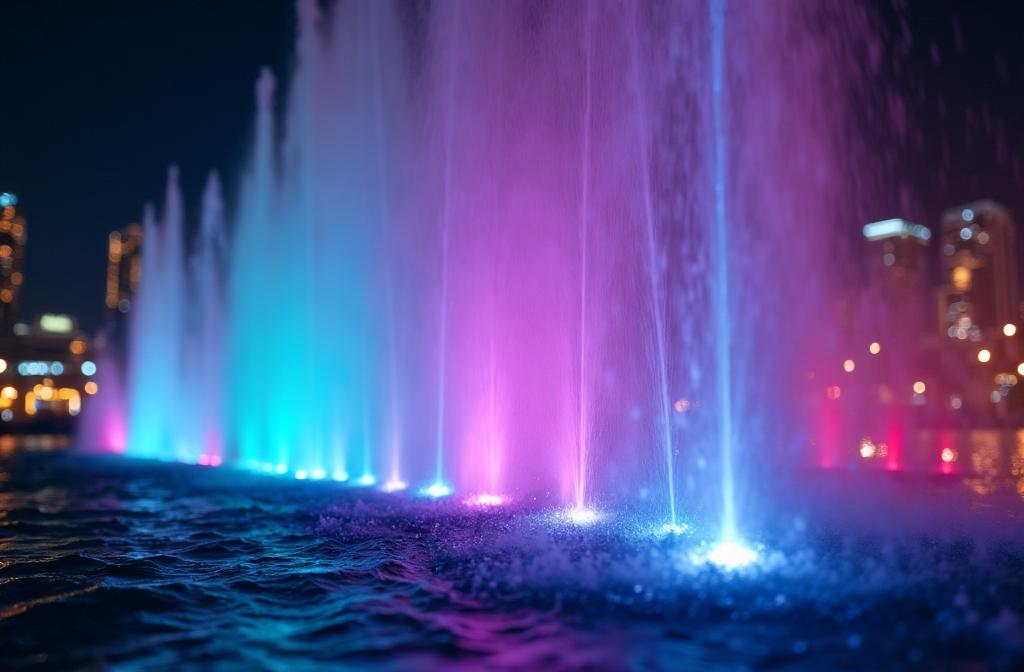
The scale of the lighting infrastructure is commensurate with the ambition of the project. The installation comprises 6,600 individual light fixtures and 25 colour projectors, generating a chromatic palette capable of producing millions of colour combinations. The optical reach of the system is such that the illuminated fountain is visible from over 32 kilometres, a testament to the photometric power and precision of the lighting array.
What distinguishes this installation from lesser water features is the quality of the optical design. Each fixture is positioned, aimed, and programmed to interact with a specific water effect. Narrow-beam projectors trace the arcs of individual jets, while wide-distribution fixtures create broad washes of colour across the mist and spray zones. The layering of these optical strategies produces a three-dimensional luminous volume rather than a two-dimensional surface effect.
Light, Water, and the Phenomenology of Public Space
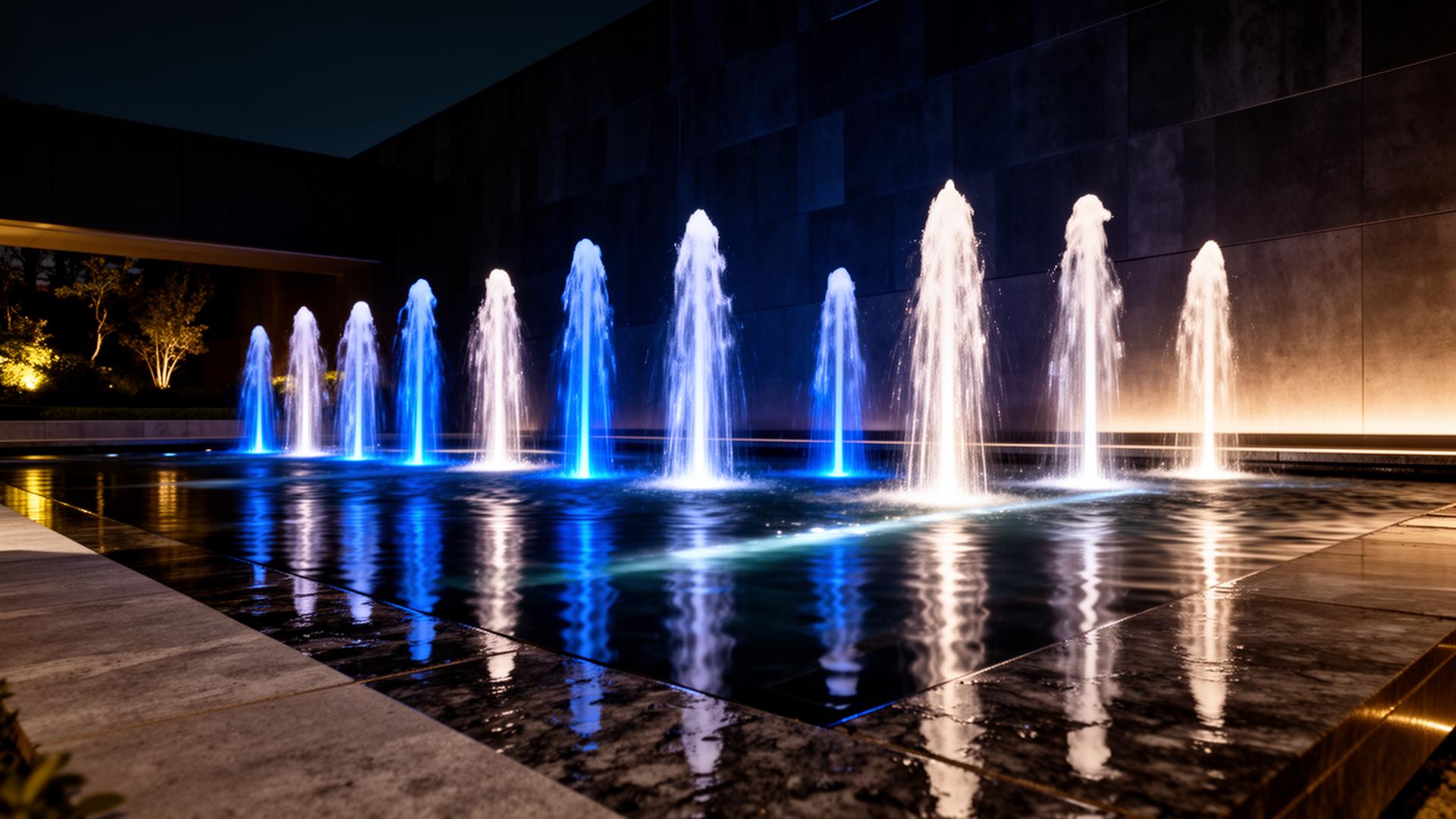
The cultural impact of the Dubai Fountain extends beyond its technical achievement. It has fundamentally altered the character of the public realm surrounding it. Each evening, thousands of people gather along the Burj Khalifa Lake promenade, drawn by an experience that is free, communal, and profoundly sensory. The fountain has become a civic anchor, a shared cultural moment that defines the identity of Downtown Dubai as powerfully as any building within its skyline.
This is a significant insight for lighting designers. The most impactful installations are not those with the largest budgets or the most advanced technology. They are those that create genuine public experiences, moments of collective wonder that strengthen the relationship between people and place.
Interdisciplinary Integration at Scale
The Dubai Fountain is a product of interdisciplinary collaboration at the highest level. Hydraulic engineers, acoustic designers, lighting specialists, software developers, and choreographers worked within a unified creative framework. No single discipline dominated. Each contributed its expertise in service of a shared artistic vision.
This model of practice is instructive for the lighting design profession more broadly. The most compelling outcomes emerge when lighting is not treated as a standalone service but as an integrated component of a larger design ambition. The Dubai Fountain demonstrates that when disciplines collaborate with mutual respect and shared creative intent, the results can achieve a level of impact that no individual specialism could deliver alone.
An Enduring Benchmark
The Dubai Fountain remains, two decades after its completion, the global benchmark for choreographed water and light installations. Its enduring relevance is a reflection not of its scale, but of its design integrity. Every element, from the hydraulic engineering to the lighting control, serves the artistic intent. Nothing is superfluous. Nothing is accidental.
For lighting professionals, it stands as a reminder that technical mastery, when placed in service of a clear creative vision, can produce work that resonates across cultures, disciplines, and generations.